
Published Weekly - Thursdays at 10 am. Next issue: May 14, 2026
Legacy, How To - No. L001 - May 16, 2026...
As we reach this part of our life-long journey, our thoughts turn to reflection on the whole of our life. Often, writing a memoir or autobiography helps us sort out and discover the values we contributed. And gathering all those old photos and phone snaps since to organize and tag them can be a worthwhile endeavor. This part of Older Adult Life shows how to.
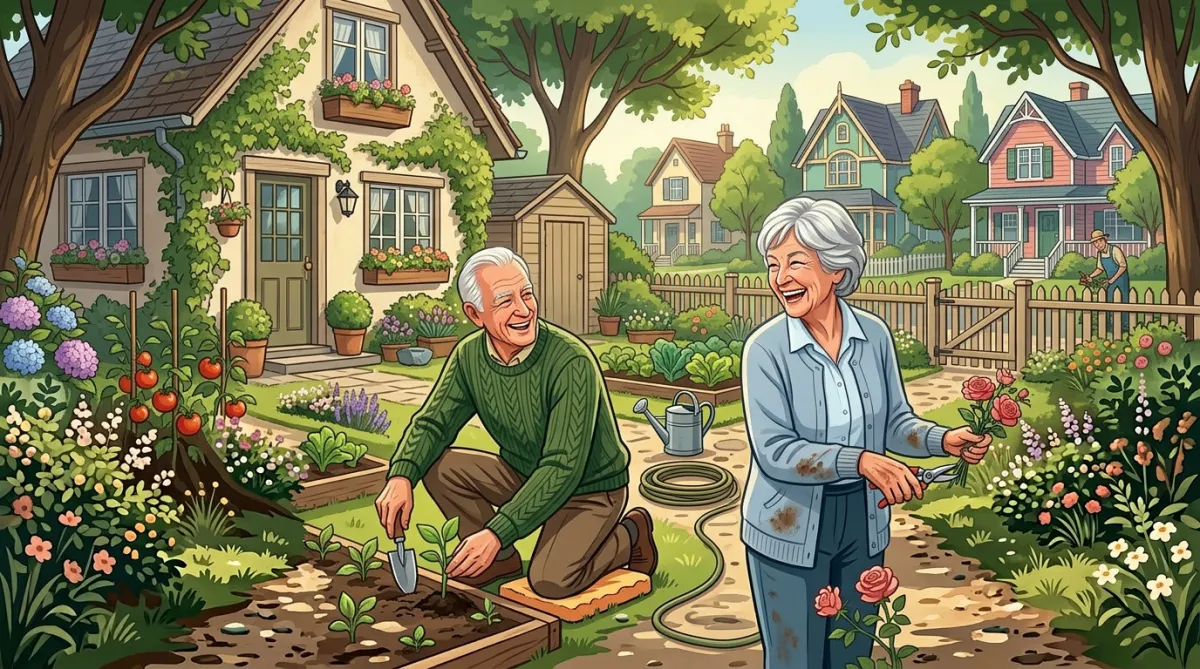
Somebody Needs to Write This Down..
The technology exists. The story is already yours. The only thing left is to start.
There is a story in your family that exists nowhere else on earth.
Not in any archive. Not in any library. Not in any database that any search engine can find. It lives in your memory — in the specific way your grandmother pronounced certain words, in what your father did the morning after he got the news that changed everything, in the neighborhood that shaped you before anyone thought to photograph it, in the decision you made at thirty-two that nobody fully understood at the time, including you.
That story is not going to write itself. And when it is gone, it is gone completely.
I am not saying that to alarm you. I am saying it because the opposite is also true: the tools available right now to capture, organize, write, produce, and preserve that story are better than they have ever been in the history of human beings trying to remember things. Better, more accessible, and in most cases less expensive than a decent dinner out.
The technology impediment — the one that has kept a lot of people from starting — is largely gone. What is left is the story. And you already have that.
This newsletter series is about removing every excuse except the one that was never an excuse to begin with: I don't know where to start.
1. Remembering: The Tools That Catch What You Almost Lost
Memory is not a filing cabinet. It does not store things in neat folders labeled by year and subject. It stores things associatively — a smell unlocks a decade, a song puts you back in a kitchen you haven't thought about in thirty years, a question asked at the right moment opens a door you didn't know was still there.
The best capture tools work with that reality rather than against it.
Voice memos are underused and underestimated. Every smartphone has one. When something surfaces — a memory, a name, a fragment of a story you haven't thought about since childhood — you can speak it into your phone in forty-five seconds and it is preserved. Not polished. Not organized. Preserved. That is the only job at this stage.
AI-assisted prompting tools have become genuinely useful here. Applications like Remini, StoryWorth, and a growing category of memoir-specific apps send you a question each day — not "tell me your life story" (which produces paralysis) but "what was the view from the window of the first house you remember?" (which produces a paragraph). Small doors. Specific questions. That is the architecture of good memory work.
Even a simple voice assistant — asking your phone to remind you of something, dictating a note while you are driving, capturing the thought before it dissolves — counts. The goal of this stage is not quality. The goal is not losing things that will not come back.
The story does not have to arrive organized. It just has to arrive.
2. Organizing: Making Sense of What You've Gathered
Once you have a collection of voice memos, written fragments, old photographs, and assorted notes that make complete sense to you and no sense to anyone else, the organizing phase begins. This is where most people stop, convinced the chaos is too far gone to sort.
It is not.
AI transcription tools — Otter.ai, Whisper, the built-in transcription on most modern smartphones — can convert hours of spoken audio into searchable, editable text in minutes. You speak; it types. You do not need to type a word of raw material if you do not want to.
Once transcribed, AI writing assistants can help you cluster related material, identify themes, suggest a chronological or thematic structure, and flag gaps worth going back to fill. You are not handing the story to a machine. You are using the machine to sort the boxes so you can see what you have.
A simple folder structure — by decade, by chapter theme, by family branch — is enough to get started. The organizational system does not have to be elegant. It has to be consistent enough that you can find things when you need them. That is the entire requirement.
Organization is not the same as completion. You are not filing the story away. You are laying it out so you can see its shape.
3. Writing: From Notes to Narrative
Here is the place where people most often talk themselves out of the project entirely. I am not a writer. I never was. Nobody wants to read what I write.
Let me address that directly: you do not have to be a writer. You have to be someone with a story, which you already are. The writing is just the delivery system.
AI writing assistants — Claude, ChatGPT, and a growing number of memoir-specific tools built on similar technology — can take your raw notes and help you shape them into readable prose. You provide the facts, the details, the emotional truth. The tool helps with the sentences. You remain in full editorial control; you read what it produces, you correct what is wrong, you add what is missing, you cut what does not sound like you. The voice stays yours. The assistance is in the construction.
This is not ghostwriting. It is scaffolding. The difference matters: a ghost builds the house; scaffolding lets you build it yourself, higher and faster than you could have managed alone.
Many people find that dictating directly — speaking their story into a tool that shapes it into prose — removes the intimidation of the blank page entirely. There is no page. There is just a conversation, and you have been having conversations your whole life.
The blank page is a myth when you come to it with a full life. The technology just helps you see that.
4. Producing: From Draft to Something That Lasts
Once the writing is done — or done enough — the production question arrives. What form does this take? Who gets it? How does it survive?
The answer in 2026 is: whatever form you choose, at a cost and complexity level that would have been unthinkable ten years ago.
For digital distribution, tools like Canva and Adobe Express can turn a manuscript into a beautifully formatted PDF — the kind of document a family can read on any device, share across any distance, and store on any cloud service indefinitely. No design background required. Templates exist for every style and sensibility.
For print, services like Blurb, Lulu, and Amazon's Kindle Direct Publishing allow you to produce a bound, physical book — hardcover or softcover, full color or black and white — with professional results, in quantities as small as one copy. A single book for yourself. Ten for the immediate family. A hundred if the story turns out to be that kind of story. The print-on-demand model means there is no minimum order, no inventory, no upfront investment beyond the production of the manuscript itself.
For those who want both, the same source document can be formatted for screen and for print simultaneously. One story. Every format. Available to every generation of your family, regardless of how they prefer to read.
The memoir does not have to be published to be permanent. It just has to exist somewhere your family can find it.
5. Recording: The Sound of Your Voice, Preserved
There is something a written memoir cannot do that an audio recording can: it cannot sound like you.
Your grandchildren may never have heard the particular rhythm of your speech, the way you pause before a punchline, the accent that places you in a specific geography and era. A recording preserves all of that without trying. It is arguably the most intimate form the memoir can take.
Voice cloning technology — tools like ElevenLabs — can now create a high-quality digital voice model from a relatively short sample of your recorded speech. Once created, that voice model can narrate any text you produce, in your own voice, with natural pacing and inflection. The implications are worth sitting with: a memoir written in your voice, narrated in your voice, available to your great-grandchildren who will never meet you.
For those who prefer a simpler path, straightforward recording — a good USB microphone, a quiet room, and a free recording application — produces results that are more than adequate for family distribution. The technology does not have to be sophisticated to be meaningful. A recording made on a Tuesday afternoon in an ordinary kitchen, telling an ordinary story, can outlast everything else in the house.
Your voice is part of the inheritance. The technology to preserve it costs less than a tank of gas.
Beyond the Memoir: Other Ways Technology Helps Tell the Story
The memoir is the backbone, but the story has other limbs worth capturing.
Photograph restoration tools — Remini, Adobe Photoshop's AI restoration features, MyHeritage's photo enhancement — can recover faded, damaged, or low-resolution images from the family archive and return them to something close to their original quality. A photograph that has been sitting in a shoebox since 1958, barely legible, can be restored to a clarity that lets your grandchildren see the faces in it clearly for the first time.
Family history platforms like Ancestry and MyHeritage now integrate DNA data, historical records, and user-contributed family trees into a single searchable archive. The story of where your family came from — geographically, historically, genetically — can be assembled with a degree of specificity that was simply not available to previous generations.
Video tools — even the camera on a modern smartphone — allow for recorded conversations, family interviews, and oral history sessions that can be edited, captioned, and distributed through private YouTube channels or family-only streaming links. The documentary form is no longer reserved for professionals. A conversation between a grandparent and a grandchild, recorded on a Saturday morning, is a primary historical document. Treat it like one.
The story of a life is larger than any single format. Capture it in as many forms as you can manage. Each one preserves something the others cannot.
What This Series Is For
Every issue of this newsletter will take one piece of the process and walk you through it in plain English, with specific tools, real steps, and no assumption that you arrive with any technical background whatsoever. The assumption we do make is that you have a story worth telling. That assumption has never been wrong.
The technology is not the point. The story is the point. The technology is just what finally makes it possible to tell it without needing to be someone you are not.
Somebody needs to write this down. That somebody is you. And it is more doable than you think.
Pass this along to someone whose story deserves to be told.
Never Miss an Issue. Subscribe Here:

Published Weekly on Thursdays


